Alzheimer’s disease is a human disease.
Almost everything we know about Alzheimer’s disease etiology comes from knowledge originated in mouse models. Mice, however, do not get Alzheimer’s disease (AD). AD mouse models have been generated by forcing the (over)expression of several familial AD (FAD) mutations. However, AD patients do not carry multiple FAD mutations and do not overexpress FAD genes. Besides, FAD mouse models fail to recapitulate many crucial aspects of this neurodegenerative disease, such as the presence of Tau tangles or cell loss, which are essential steps leading to neurodegeneration and cognitive decline.
Further, these systems cannot model the sporadic AD form (SAD), which is due to a combination of genetic risk factors and environmental factors. Importantly as well, human neurons and human glia cells present differences when compared to the murine counterparts, such as higher neuronal vulnerability to toxic amyloid-β species and neuroinflammation, and a higher immunoreactivity pattern of microglia and astrocyte cells.
The Alzheimer’s Disease Modelling Group (ADMG) works to unravel human pathological mechanisms triggered during the pre-symptomatic phase or silent phase of AD pathology, whether in familial (FAD) or sporadic (SAD) forms of the disease. Our aim is to discover and to better understand the very early changes happening inside the brain, and to elucidate novel targets that may help the design of novel therapeutic approaches to combat AD at an early stage.
Our experimental models are 3D human brain organoids differentiated from human pluripotent stem cells (hPSC), grown for long-term in a dish to recapitulate features of the adult mature brain. Our models recapitulate the presence of neurons but also glia cells, including the immune cells of the brain, the microglia cells, and recapitulate the long phase of human neuronal maturation that culminates with mature neuronal electrical profiles in long-term brain organoids. Further, we generate various AD brain organoid models that recapitulate different features of the disease, such as presence of amyloid-β aggregates, increased Tau phosphorylation, astrocyte reactivity and decreased synaptic density, highlighting their value as early human in vitro models for AD.
What we are working on
Project 1 — Modeling the adult brain using long-term human brain organoids (hBOs)
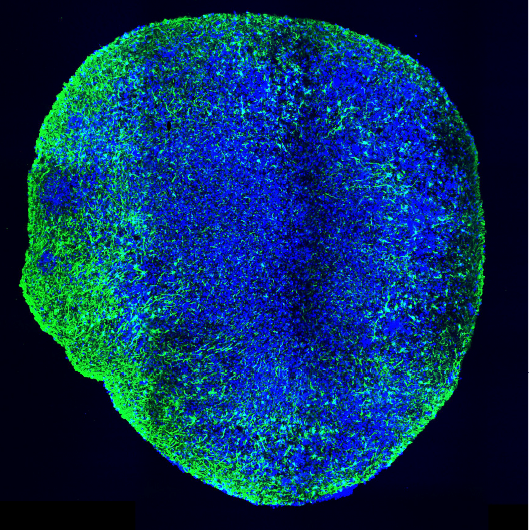
Human neurons take a very long time to mature — a protracted timeline that is one of the defining features of our species, and one that most organoid protocols stop well short of. We grow human brain organoids in long-term culture to reach features that are closer to the adult mature brain rather than the fetal one.
These long-term hBOs contain neurons together with glia, and progress through the extended phase of human neuronal maturation that culminates with morphological and functional changes rendering complex axonal and dendritic profiles and mature neuronal electrical patterns.
The platform is not restricted to one brain region: alongside cortical organoids we generate organoids of other regional identities, including cerebellar organoids and ventral telencephalic organoids, which opens the specification and maturation of other major human neuronal subtypes in vitro.
Project 2 — Generation of human neuroimmune competent cortical organoids to model neurological diseases
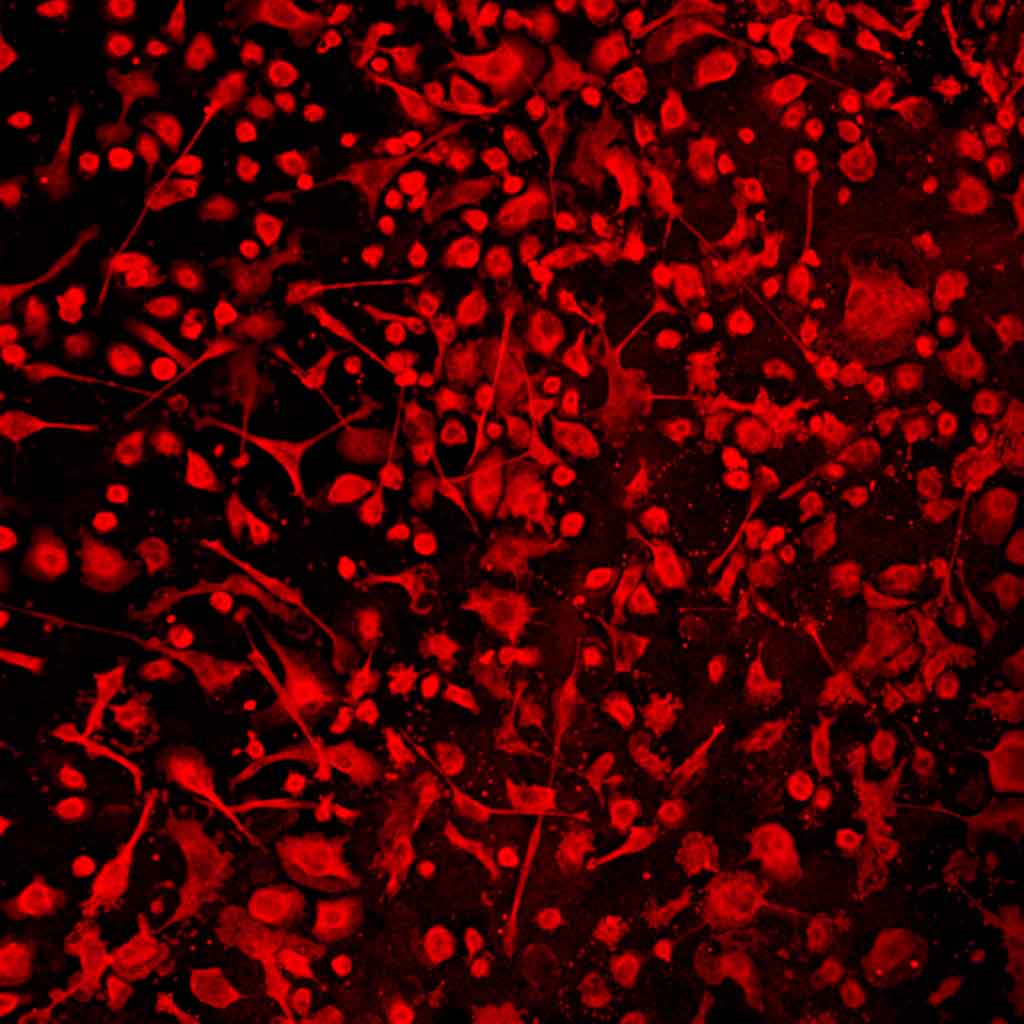
Microglia, the resident immune cells of the brain, arise from a different developmental lineage than neurons and are therefore absent from conventional brain organoids. Yet much of the genetic risk for late-onset Alzheimer’s disease sits in genes expressed by these cells, and human microglia show a higher immunoreactivity pattern than their murine counterparts.
This project builds neuroimmune competent cortical organoids containing human microglia alongside neurons and astrocytes, so that the human inflammatory response to pathology can be studied directly in human tissue rather than inferred from mouse.
Project 3 — Dual therapeutic strategies for brain repair for stroke using human ischemic-like hCOs
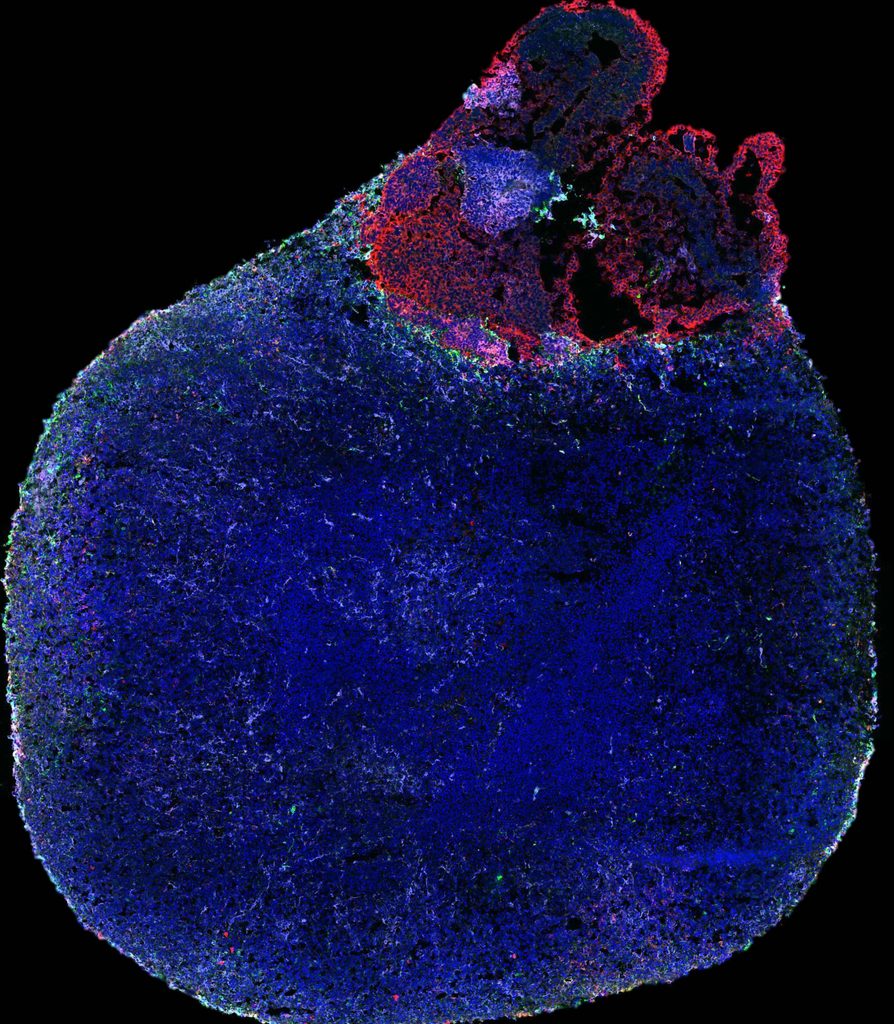
Ischemic injury in human brain tissue can be modelled in cortical organoids, giving a human system in which both the damage and the attempted repair can be followed in vitro. The project seeks to understand the efficiency of brain repair approaches such as the use of neurogenic compounds and stem cell-based therapies in a completely human system in vitro.
Project 4 — Unraveling early mechanisms of disease using AD multicellular human cortical organoids
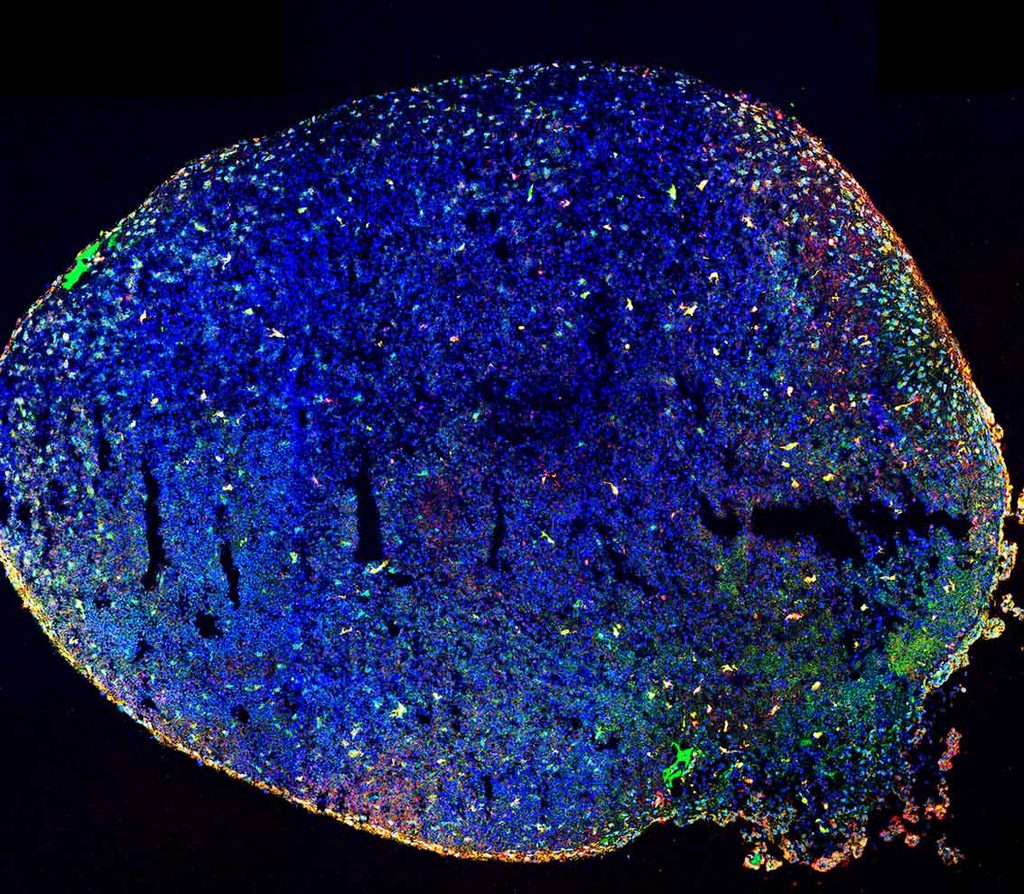
We use cells from AD patients to generate human multicellular cortical organoid models that contain neurons, astrocytes and microglia cells, thus representing the major brain cell types from patients in a 3D system in vitro. These AD organoids recapitulate different features of the disease: amyloid-β aggregates, increased Tau phosphorylation, astrocyte reactivity and decreased synaptic density, and are therefore key to study pathological features of human brain cells.
The focus is the pre-symptomatic, silent phase — the earliest cellular changes, in both familial and sporadic forms, at the point where intervention still has something to protect. Targets that emerge here are the ones we consider worth pursuing therapeutically.